
Knowledge Networking Portal for Sustainable & Responsible Tourism









 Annapurna Base Camp Trek Package- A Trekkers' Guide
Annapurna Base Camp Trek from Pokhara: Comprehensive Package Description
Information on going from Pokhara to Annapurna Base Camp Trek including its cost, itinerary, elevation, and timing, providing all facilities of trekking in Nepal.
First, the Annapurna Base Camp Trek from Pokhara begins from Pokhara (822 m) and provides the nearest entry point to the Annapurna region. In addition, the package comes along with transport, permits, guides, porters, staying facilities, and meals. This package also provides an introduction to the villages, hills, and Alpine forest. Consequently, the package is the most preferred Annapurna Base Camp trekking package in Nepal.
Secondly, the Annapurna Base Camp trek usually begins by a car/jeep journey to Nayapul or Ghandruk, depending on the route. The trekkers then move through Tikhedhunga, Ulleri, Ghorepani, Tadapani, eventually arriving in the Modi Khola Valley. This makes acclimatization possible. The arrangement is ideal for both new trekkers and experienced trekkers.
Actually, now trekkers can go directly Ulleri/Banthanti by jeep from Pokhara and begin the trek to Ghorepani.
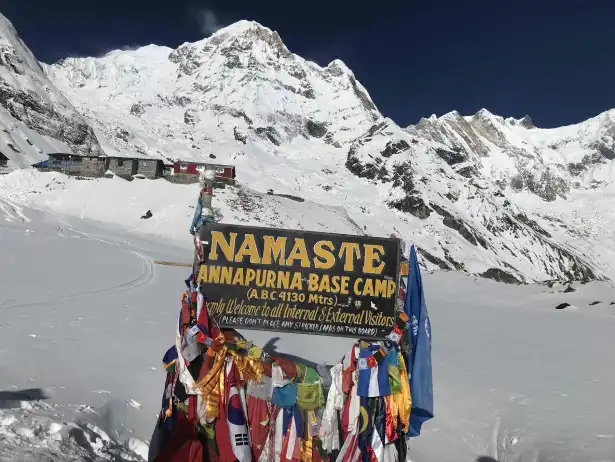
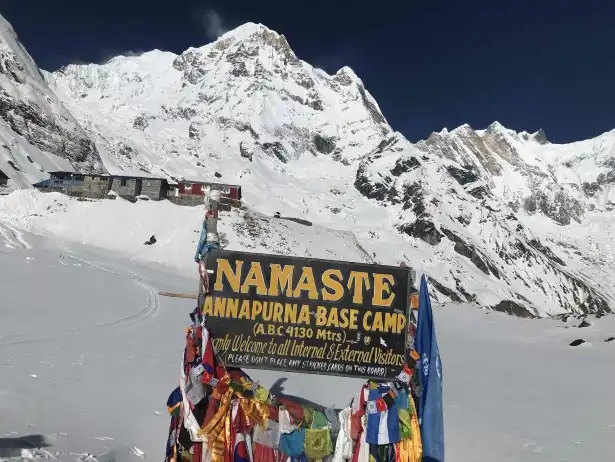
Additionally, the trek involves the village of Tadapani, which lies at an elevation of 2,620 m, followed by Chomrong, Bamboo, Doban, and Deuralia, situated at 2,170m, 2,310m, 2,600m, and 3,230m, respectively. The scenery here shifts from rhododendron to glacial systems. Finally, the trekkers arrive at the Machhapuchhre Base Camp, which occupies an elevation of 3,700m, as well as the Annapurna Base Camp with an elevation of 4130m.
In addition to this, the standard package for the Annapurna Base Camp Trek from Pokhara will take between 7 to 10 days. This will cost between USD 650 and USD 1,200 based on the service and the number of people. This will include the cost of ACAP and TIMS cards, guides and porters, meals, and accommodation.
Moreover, Pokhara packages have varied flexibility with respect to customization. One can choose Ghorepani Poon Hill sunrise (3,210m) or Jhinu Danda Hot Springs (1,780m) along with the existing package while trekking Annapurna Base Camp. Hence, Pokhara remains the initial point of choice when it comes to Annapurna base camp trekking.
- Transportation Pokhara
- ACAP permit and TIMS Card
- Licensed trekking guide and porter
- Teahouse accommodation and meals
- All meals
- Disaster response coordination
Lastly, the Annapurna Base Camp from Pokhara holiday package is efficient, safe, and varied. The reliance on moderate altitude gain eliminates the negative effects of high altitude. This package is, thus, the best for adventurers looking for the whole experience of the Himalayas. Indeed, one of the best trekking holiday packages in the whole of Nepal.

Annapurna Base Camp Trek from Kathmandu: How to Start and Save Time
Annapurna Base Camp Trek from Kathmandu-an extensive guide on transportation, tips, altitudes, costs, and ways to optimize your trekking experience.
To start, Annapurna Base Camp Treks from Kathmandu (1,400m) effectively, time needs to be saved. Trekkers need to journey from Kathmandu to Pokhara (822m) by flight or a tourist bus. Flying takes 25 minutes, and buses take 6-8 hours. Thus, a flight is considered to be the fastest means of transport in this connection.
Secondly, many Kathmandu trekkers prefer flights involving the same day arrival in Pokhara. Then the climbers may stay in Pokhara for the night or proceed straight to Nayapul (1,070 m) or Ghandruk (1,940 m). In effect, this method saves an entire trekking day. Therefore, effective transfer systems make Kathmandu starts possible.
Additionally, once on the trekking trail, the trail follows a traditional Annapurna Base Camp trek. The trail passes through points like Ulleri (2,073 m), Ghorepani (2,860 m), Tadapani (2,630 m), and Chhomrong (2,170 m). This is done in a way that reduces risks associated with altitudes.
At the same time, time-efficient treks tend to bypass Poon Hill (3,210m) and head directly into the valley. Trekkers progress via Bamboo (2,310m), Dovan (2,600m), and Deurali (3,230m). However, the journey to Machhapuchhre Base Camp (3,700m) and Annapurna Base Camp (4,130m) is the same. As
Further, Kathmandu-based ABC treks cost between USD 750 and USD 1,300. The cost also includes domestic flights, transportation, permits, guides, porters, and lunch. Flights are helpful in keeping the number of trekking days short. Thus, people with busy schedules opt for treks involving Kathmandu.
In addition, booking flights early in the morning ensures that one is not affected by bad weather. Buffer days also enhance success when peak periods are involved.
Flight vs Land
- Flight Kathmandu–Pokhara 25 mins
- Tourist Bus 6-7 hrs
- Private Car 5–6 hours
At last, the trek from Kathmandu to the base of Annapurna passes off well when proper logistics are employed. Flying in and direct transfer help maintain the quality of the trek. Trekkers get to climb along the slopes of Annapurna I (8,091m), Machhapuchhre (6,993m), and Annapurna South (7,219m).

ABC Trek via Poon Hill: Points to Appreciate the Sunrise
Traverse the ABC trek route via Poon Hill, including the viewpoints for sunrise, route planner, elevations, trekking details, trekking options, and price information.
First, the ABC Trek via Poon Hill is an amalgamation of the world-famous Annapurna Base Camp Trek and Nepal's premier sunrise spot. This trekking trail embarks either from Pokhara (822 m) and proceeds by car to either Nayapul (1,070 m) or Hile (1,430 m). This makes it an attractive and beautiful ABC trekking trail among all other possibilities due to its added scenic highlights of villages and majestic Himalayan ranges.
Secondly, trekkers climb through Tikhedhunga (1,570m) and Ulleri (2,073m) via paved stone steps. In addition, the path leads towards Ghorepani (2,860m), a colorful Magar community nestled among growing rhododendron trees. Furthermore, the pace of this climb promotes acclimatization. Therefore, this is a good climb for those who like comfort
Further, the feature is visible at Poon Hill (3210 m), during the sun rise. The trekkers get a glimpse of Annapurna I (8,091 m), Annapurna South (7,219 m), Dhaulagiri (8,167 m), Hiuchuli (6,441 m), and Machhapuchhre (6,993 m) mountains adorned with shades of gold. If the weather is clear,
Also, after Ghorepani, there is a descent to Tadapani (2,630 m) through dense forests. Trekkers arrive at Chhomrong (2,170 m), also known as the entrance to Annapurna Sanctuary. Thus, there is an introduction in this stage to stone villages and farmlands. Hence, contact with culture is
Additionally, the trail passes along the Modi Khola valley via Bamboo (2,310m), Dovan (2,600m), and Deurali(3,230m). The vegetative cover will now change to alpine. Trekkers will eventually get to Machhapuchhre Base Camp (3,700m). This provides the body with acclimatization for high altitudes.
The ascent also culminates at the Annapurna Base Camp with an elevation of 4,130m. The base camp lies in the glacial amphitheater, and the surrounding peaks include Annapurna I with a height of 8,091m, Annapurna South standing at 7,219m, and Hiunchuli with a peak of 6,441m. The sunrise and sunset offer an immersive experience in
Additionally, the trek to Poon Hill using the ABC trail normally takes a trekker a minimum of 9 to 12 days. The packages for this trek range from USD 750 to USD 1,300. This is a fair price, considering that it takes into account guides, porters, accommodation, meals, and trekking fees.
Key Features:
- Pokhara (822 m) to Nayapul (1,070 m
- Ghorepani&Poonhill (2,860 & 3,210 m) sunrise
- Chhomrong (2,170m)
- Annapurna Base Camp (4,130 m) summit destination
Lastly, the ABC Trek via Poon Hill offers the best sunrise viewing and proper acclimatization. The trekking route offers the sights of mountains, villages, and glaciers. As a result, the route is suitable for all adventurers looking for beautiful scenery, comfort, and experiences from the Himalayas.

Short ABC: 5-Day and 6-Day Short Itineraries (Who They’re For)
Get the short ABC Trek 5 days and 6 days itineraries with elevations, prices, feasibility, risks, and time-saving trekking tips.
Firstly, Short trekking routes for ABC are suitable for those who have limited time and are quite fit. These trekking routes have shortened the traditional Annapurna Base Camp Trek to a huge extent. Therefore, Short trekking routes for ABC begin from Pokhara (822m) with direct road access to Ghandruk (1,940m) or Jhinu Danda (1,780m).
Secondly, the 5-day ABC trek involves seasoned trekkers with prior experience with high altitudinal adjustments. The number of hours trekked per day rises to seven or eight hours. The treks go through high altitudes such as Chhomrong (2,170m), Bamboo (2,310m), and Deurali (3,230m). Hence, fitness levels would be important to maintain for this 5 day ABC Trek.
Additionally, this 6-Day ABC Trek offers a slight improvement in acclimatization. Trekkers get extra time at either Bamboo (2,310 m) or Dovan (2,600 m). This is a strategy geared at acclimatizing trekkers with speed. It is, therefore, ideal for trained fitness beginners.
In addition, both routes pass through Machhapuchhre Base Camp (3,700m) and subsequently reach Annapurna Base Camp (4,130m). The range of peaks includes Annapurna I (8,091m), Annapurna South (7,219m), Hiunchuli (6,441m), and Machhapuchhre (6,993m).
Moreover, Short ABC treks are priced between USD 850 and USD 1,400. In these, the prices include private transport, permits, guides, porters, and meals. Prices are relatively high because of the level of activity and logistics involved. Thus, such packages focus more on activity than leisure.
Actually, these itineraries also do not fit trekkers who have altitude sensitivity or low fitness levels. High altitude increases the chances of altitude sickness. Professional guides closely monitor any symptoms. Hence, the issue of safety management assumes significance.
Furthermore, the weather can enormously influence the success of shorter tours. Favorable seasons, for example spring and autumn, are the best. Buffer days are still restricted.
Short ABC Trek Itinerary Comparison:
|Itinerary| ABC 5-Day Very fast Experienced, high fitness
ABC 6 Day Fast Fit trekkers with Wider experience and high fitness
Lastly, Short itineraries for ABC help to reach Annapurna Base Camp in an efficient manner. It is ideal for people who put importance on time and not on a slow and steady approach. Moreover, people with preparation and proper directions help to have a high success rate.
Classical 8-11 Days Annapurna Base Camp Trek Itinerary
Classical 8-11 day Annapurna Base Camp trekking itinerary including details of plan, height, cost, permit fee, and package information.
Firstly, the Classical Annapurna Base Camp trekking takes eight to eleven days with a gradual increase in elevation and effective acclimatization. The typical trekking begins from the city of Pokhara itself at an elevation of 822 m, with a drive to Nayapul at 1,070 m or Ghandruk at 1,940 m.
Secondly, on the first day, the trekking activities include driving and short walk to Tikhedhunga or Ghandruk. This occurs at an altitude of either 1,570 meters or 1,940 meters. These activities also introduce terraced farm and Gurung villages. They still walk for a moderate number of hours.
In addition, Day Two includes the climb up Ulleri (2,073 m), and then head towards Ghorepani (2,860 m). Stone stairs represent an exercise in endurance. However, they offer rich rewards nonetheless. It’s mostly forested with rhododendrons. As such
Moreover, Day Three also emphasizes a sunrise climb of Poon Hill (3,210 m) to witness Annapurna I (8,091 m), Dhaulagiri (8,167 m), Annapurna South (7,219 m), and Machhapuchhre (6,993 m) from a distant location. After that, trails descend to Tadapani (2,630 m).
Moreover, Day Four involves navigation through Chhomrong, a gateway to the Annapurna Sanctuary located at an altitude of 2,170m. Stone buildings and mountains characterize the landscape. However, altitude is lowered slightly for acclimatization. As such, the body acclimatizes.
Moreover, Day Five passes through Bamboo (2,310m) and Dovan (2,600m). The Modi Khola valley becomes narrower slowly. Alpine forests begin to occur. As a result, awareness about altitude increases.
Meanwhile, Day Six passes through Deurali (3,230m) and Machhapuchhre Base Camp (3,700m). Glacial features are visible. Annapurna South (7,219m) looms in front. Thus, trekkers encounter high-altitude
Moreover, the tenth day sees the peak experience with the arrival at Annapurna Base Camp at 4,130 meters. Annapurna I (8,091m), Hiunchuli (6,441m), and Machhapuchhre (6,993m) surround the base camp. Watching the sunrise is very realistic and spectacular. This is what defines
Moreover, Day Eight marks the start of the journey downwards towards Bamboo or Jhinu Danda, at 2,310 m or 1,780 m, respectively. The feeling is easier while walking downwards. Muscle recovery is slow. Therefore, it is crucial to pace.
Additionally, Days Nine to Eleven involve flexibility in Jhinu hot springs (1,780 m) or villages. Trekkers get to return to Pokhara (822 m) by road again. This happens according to trekking abilities. Hence, flexibility comes in through customization.
Itinerary Snapshot:
- Total Duration: 8–11 days
- Max Altitud: Annapurna Base Camp (4,130
- Cost Range: USD 750-120
- Includes: permits, guide, porter, meals, and accommodation
Lastly, it is worth highlighting that the classic Annapurna Base Camp Trekking Itinerary has safety, beauty, and adaptability. Health and maximum views are maintained through gradual ascent. Hence, it is still considered the safest trekking route in Nepal. This pattern is ideal for first-timers when it comes to Himalayan Trekking
Jhinu Danda Route: Hot Springs, Jeep Ride & Local Advice
Jhinu Danda trek guide including hot springs, jeeps, altitude, tips, and Annapurna Base Camp trekking package details.
First of all, the Jhinu Danda Trek adds a comfort experience to the Annapurna Base Camp Trek. Jhinu Danda is situated at 1,780m above the Modi Khola valley. It is one of the alternatives that offer hot springs and comfort. Therefore, Jhinu Danda adds a comfort aspect.
Secondly, trekkers begin the journey from Chhomrong (2,170 m) to Jhinu Danda (1,780 m). There is steep stone stairway descent. Trekkers need to have their knee controls while walking. Thus, trekking poles become highly helpful.
Additionally, natural hot springs are located close to the Modi Khola River at an altitude of about 1,600m. Warm mineral water is in pools. It is great for relaxation. Trekkers take warm baths. As such, exhaustion is removed.
Moreover, jeep road access increases the flexibility of trekking routes. The jeeps run between the road points of Pokhara (822 m), Siwai (1,180 m), and Jhinu. This increases the flexibility of trekking routes because the trekking days are reduced.
Moreover, most trekkers consider concluding their Annapurna Base Camp Trek from Jhinu Danda (1,780 m). Conversely, some treks start from this location to reduce travel time. This method proves quite efficient too.
In addition, the trail gives opportunities for exposure to culture through visits to the Gurung villages. Basic meals and accommodation are provided by teahouses along the route. The locals are very generous about information on their region through their hosts.
Further, Jhinu Danda works well for short and even for classical trekking itineraries too. It goes well with Bamboo (2,310m) and Chhomrong (2,170m too). Altitude during the descent is low enough for a safe acclimatization process and hence and it is safe even to travel for longer distance such as 12-14 kilometers a day.
Also, ABC trekking packages via Jhinu Danda fees vary from USD 800 to USD 1,300. These costs cover jeep fees, guide, and stay. However, accessing hot springs is still cheap. Therefore, value rises.
Moreover, the weather also highly impacts jeep road conditions. There are muddy paths during monsoons. However, drivers take different routes. Thus, local recommendations become essential.
Tips Locales Support:
- Early morning visit for hot springs to avoid crowds
- Sandals to walk around river pools
- Transfer in jeep after you finish hot springs back to Pokhara
- Drink fluids after soaking
At last, the trek to Jhinu Danda brings trekking and health together as hot springs are found along this trek to enhance recovery and moods. Access by jeeps saves time without missing any scenic views along the way. For this reason, this trek to Annapurna Base Camp via Jhinu Danda remains popular.

Ghandruk& Landruk Variations: Cultural Stops and Best Photo Spots
Variations of the Ghandruk and Landruk routes that involve cultural villages, photography spots, altitude, itineraries, package prices, and tips.
Firstly, both Ghandruk and Landruk treks add culture and heritage aspects as well as photo opportunities in terms of ANNAPURNA BASE CAMP Trek. Ghandruk (1,940m) and Landruk (1,565m) are located on either side of the ridge traversing the Modi Khola Valley. Stone houses and museums are here.
Secondly, the trek generally begins from Nayapul (1,070 m), or from Kimche (1,640 m) or from Siwai. Large paths and stairs take trekkers through fields irrigated by farming terraces. The culture is dominated by the Gurung communities. As such, trekkers receive a realistic experience in the villages
Additionally, there is Ghandruk, which is 1,940m high and offers great sunrise and sunset spots for photos. Other peaks that can be seen from here include Annapurna South with a height of 7,219m, Hiunchuli that stands 6,441m high, Machhapuchhre which is 6993m.
Moreover, there is another variation called the Landruk variation, which forks after Jhinu Danda (1,780 m) or after Tolka (1,700 m). The routes traverse the hillsides along Modi Khola. Few trekkers follow the route through Landruk (1,565 m).
Likewise, Landruk (1,565 m) allows valley-wide photography with a wide-angle lens. Annapurna South (7,219 m) and Machhapuchhre (6,993 m) occupy prominent places in the sky. The texture is improved by afternoon
Further, cultural interaction is prevalent in both villages too. There is visible cultural heritage in terms of traditional attire, methods of agriculture, and food. There are community-owned lodging sites that boost the economy of these places. Therefore, these routes make appropriate contributions to responsible tourism too.
Furthermore, the variations rejoin again at Chhomrong (2,170m), which is the primary entry point to the Annapurna Sanctuary. Next, the trekker proceeds to Bamboo (2,310m). Variations do not have an impact on accessing the summit. Flexibility is therefore high.
Here, trekking packages ranging from USD 750 to USD 1,250 when including Ghandruk/Landruk are additionally considered. In fact, customized programs are definitely better, as they include nights for photography through certain itineraries.
Moreover, seasonal lighting conditions provide distinct photo qualities. Autumn offers sharp day light, and spring brings colors of rhododendrons. Shoot in the mornings and evenings for better angles.
Photo Spot Comparison:
- Ghandruk (1,940 m): village roofs, nearby peaks
- Landruk (1,565m) - wide valleys, less people
Lastly, the Ghandruk and Landruk variations offer the fusion of cultures and landscapes. Every village presents different photographic opportunities. Trekkers find flexible and full-of-culture routes. Thus, these variations contribute positively to the Annapurna Base Camp experience.

ABC Trek Permits, ACAP & TIMS: What Your Package Must Include
Annapurna trekking permits explained with ACAP, TIMS, fees, policies, altitudes, and the things your trekking package should entail.
Firstly, the ABC trekking permit is a mandatory component of all Annapurna Base Camp Treks packages. The trekkers have to obtain this permit before entering the area. The permit helps in the conservation of this area and also ensures the trekkers’ safety. As such, no trek will take place without the permit.
Secondly, the Annapurna Conservation Area Permit area encompasses the whole area where trekking will take place. Annapurna Conservation Area starts from near Nayapul at an altitude of 1,070 m and extends beyond the Annapurna Base Camp at an altitude of 4,130 m. ACAP finances environmental conservation. Hence, it
In addition, the Trekkers' Information Management System provides trekker tracking and responds to emergencies. TIMS holds information about the individuals and their programs. It is through this information that rescues are carried out by the government. Hence, there is enhanced safety.
In addition, ACAP fees for non-nepalese trekkers run about NPR 3,000 per person. TIMS costs about NPR 2,000 per person for independent trekkers. However, trekkers using packages tend to be charged lower fees for TIMS.
Moreover, the cost of both permits is included in the package by trekking companies. The treks have documents provided by guides. The checkpoints check the permits. Therefore, it is easy to comply.
Here, permits remain relevant irrespective of variations in routes too. Ghandruk (1,940m), Landruk (1,565m), Jhinu Danda (1,780m), and Poon Hill (3,210m) remain under ACAP. Permits remain unaltered with respect to routes too. Consequently, general applicability continues to
Furthermore, trekkers must have copies of their passes and photos. Copies of important documents are essential. Electronic copies facilitate manually conducted verification. Organizers process papers effectively. Therefore, planning prevents delays.
Additionally, the fees that are paid help in the upkeep of the trails and the community projects. This is because the fees enhance signs, bridges, and the waste management. The villages benefit directly. Thus, the permit is useful.
In addition, some packs contain briefings on permits prior to leaving for a trekking journey. Trekkers are taught guidelines and codes of conduct for conservation. Hence, it becomes simple for one to act in a responsible
Permit Inclusion Checklist:
- ACAP permit receipt
- TIMS Card
- Checkpoint verification
- Registration of emergency contacts
Lastly, permits offer the basis of all legal treks to Annapurna. This is because ACAP safeguards nature and TIMS enhances security. Every high-quality package for a trek entails both of these. The inclusion of these two factors thus constitutes the standard basis of an Annapurna Base Camp Trek package.
Cost Breakdown: Budget, Mid-Range, and Luxury ABC Packs
Annapurna Base Camp trekking costs, comparing budget, standard, and luxurious treks, including the details of an Annapurna Base Camp trek.
First, costs of Annapurna Base Camp Trek vary based on level of comfort, services provided, and duration of treks. Nonetheless, all treks take place within the Annapurna region that stretches from Pokhara (822 m) to Annapurna Base Camp (4,130 m). Cost implications depend on accommodation services, mode of transportation, and level of assistance provided.
Secondly, the budget of Annapurna Base Camp treks are offered in packages that are tailored towards those on a tight budget. In most cases, this kind of package fetches between USD 600 and USD 750. Some of the services included in this package are basic tea house accommodation, shared rooms, local cuisine, permits, as well as a local guide. Therefore, comfort is simple
In fact, the cost of ABC Trek depend on transport by public transport from Pokhara (822m) to Nayapul (1,070m), Ulleri or Ghandruk (1,940m). Rooms are not heated, nor are bathroom facilities private. Food is basic dal bhat fare.
Furthermore, semi-budget packages of Annapurna Base Camp are apt when one intends to save money while completing the adventure. Prices are varied, from $800 to $1,100.
However, Annapurna Base Camp Budget Package is convenient if one is interested in a semi-budget package and wants a refund if the package is not of good quality.
Moreover, mid-range trekking packages commonly provide jeep rides to the trails of Ghandruk (1,940 meters) or Jhinu Danda (1,780 meters). The guides take care of the trekkers’ acclimatization and pacing. Then the availability of hot showers starts at lower points. Hence, the comfort
Additionally, the deluxe/Luxury packages for the Annapurna Base Camp Trek emphasize maximum comfort. The corresponding prices vary from USD 1,300 to a maximum of USD 2,000. In deluxe packages, better lodges, private rooms, and meals can be expected, as well as extra personnel. It means the level of service is excellent.
Further, luxury Annapurna treks will also encompass plane transfers involving Kathmandu, which is at 1,400 m, and Pokhara, situated at 822 m. Helicopter rescue insurance is also recurrent. Some luxury treks involve heated dining rooms. So, luxury treks are luxurious.
Also, for all packages, necessary permits are included. ACAP extends up to Annapurna Base Camp at a height of 4,130 m. TIMS is for trekker safety. Fees are included for all packages.
Further, the more treks are added to the itinerary, the more they’ll cost; this is true for side trips too; for example, to Poon Hill (3,210 m) or Jhinu hot springs (1,780 m).
Actually, seasons affect the cost as well. Discounts are given in winter and monsoon seasons. Autumn and spring seasons have higher costs because of their popularity.
Packaging Cost Comparison:
- Budget Package: USD 600-750
- Mid-Range Package: USD 800-1,100
- Luxury Package: 1300-2000 USD, premium
Lastly, when it comes to the cost of packages at Annapurna Base Camp, service quality and logistics are what the price tags reflect. Budget is ideal for solo travelers, while luxury is ideal for comfort lovers. What lies in between is ideal.
Best Season for Trekking the ABC in Nepal
When to go to trek Annapurna Base Camp to have proper climatic conditions and visibility.
First of all, planning for the right moment to climb to the base of Mt. Annapurna helps ensure safety and optimal scenery appreciation. The trail includes climbing from Pokhara, which lies at 822m above sea level, to the base of Mt. Annapurna, which is 4,130m above sea level.
Secondly, Annapurna Base Camp Trek in spring is from March to May. This is in the Annapurna region. The flowering of rhododendrons is between Ghorepani (2,860 m) and Tadapani (2,630 m). The climate is moderate at higher camps. Spring is, therefore, a popular season.
Also, there are good views of Annapurna I (8,091m), Annapurna South (7,219m), Machhapuchhre (6,993m), and Hiunchuli (6,441m) in the spring season. The snow takes time to melt above Deurali (3,230m). Trails
Moreover, Annapurna Base Camp Trek in autumn holds a September to November season. Skies are clear after the monsoons. Moreover, temperatures are pleasant even at Machhapuchhre Base Camp, with a maximum of 3,700 meters. So, autumn is considered the most preferable time for a trek.
Additionally, the fall season offers great visibility in the mountains. Annapurna I (8,091m), Dhaualagiri (8,167m), and other mountains look clear in the early morning sunrise. Trekking routes remain tractable. Success rates in trekking remain
Further, Annapurna Base Camp Trek in winter treks operate from December through February. It becomes colder above Bamboo (2,310m). Annapurna Base Camp (4,130m) is in most cases icing-cold because of the snow cover. It requires experienced trekkers.
In addition, winter treks entail less crowd presence and quiet trails. Blue skies follow snowfall. The mountain lodges are open but with restrictions. Thus, solo trekkers find peace.
Moreover, the monsoon season is from June to August. Heavy rainfall also hits the low-lying areas, including Nayapul (1,070m) and Jhinu Danda (1,780m). As a result, the trekking route is filled with leeches. Thus, trek
Moreover, monsoons often obscure the view of the mountains. Landslide occurrences also hinder assess roads. Vegetation, however, appears thick and green. Therefore, only adventure trekkers are suitable for monsoons.
Additionally, the safety of altitudes in any season cannot be overruled. The days of acclimatization around the villages of Chhomrong (2,170m) and Deurali (3,230m) are important. The guide adjusts the speed of ascent depending upon
Season Comparison:
- Spring: flowers blooming, warm weather, bustling trails
- Autumn: Clear skies, optimum visibility, maximum crowds
- Winters: Cold, snowy, and fewer trek
- Monsoon: wet, green, low visibility
At last, the best time for an Annapurna Base Camp trek depends on what one considers most important. Spring and autumn are perfect. Winter provides solitude for those who are well-prepared. Monsoon rain is suitable for experts only. So, proper planning allows one to have a successful experience of the Annapurna Base Camp Trek.
Fitness, Difficulty & Altitude: How Do You Feel About 4,130 m?
Information on the fitness level, difficulty, and height of the Annapurna Base Camp trek with tips on preparation and trekking readiness.
To begin with, the Annapurna Base Camp Trek involves visiting the Annapurna Base Camp at an altitude of 4,130 m. This requires some level of fitness and climb ability. For instance, the journey begins at Pokhara, which is at an altitude of 822 m, and the walking duration per day is five to eight hours.
Secondly, the standard of difficulty of Annapurna Base Camp Trek is rated as medium to difficult. This is because the trail is accompanied by long stone staircases at Ulleri (2,073 m) and steep slopes at Jhinu Danda (1,780 m). It is therefore relative because the trail goes through forest paths and glacial moraines.
In addition to this, cardiovascular fitness also has an important part to play in achieving success on the route. Regular ascents from Bamboo (2,310m) to Deurali (3,230m) help build stamina. Thin air means less availability of oxygen.
Finally, each trekker responds in a different way to the effects of elevation when above 3,000 meters. The base camp of Machhapuchre at 3,700 meters represents a critical area because one may suffer from headache, tiredness, or nausea. As such, it becomes important
Moreover, acclimatization is also retained in standard trekking itineraries. Villages such as Chhomrong (2,170 m) and Dovan (2,600 m) offer a gradual increase in elevation. Drinking and resting are promoted by guides. Therefore, risk is lessened and safety is multiplied.
In addition, fitness training should also be started at least six weeks prior to the trip. Hiking, stair training, and aerobics are of immense benefit. Training while carrying a lightweight pack increases stamina. Therefore, training increases confidence.
In fact, mental preparedness is required along with physical power. The Annapurna Base Camp (4,130m) has unpredictable weather conditions, which can demotivate a person. The cold climate in the mornings and extended daylight can be a test of one’s will and confidence.
Further, porters alleviate stress associated with loads. Trekkers carry only necessary gears because porters carry all other loads. Consequently, conservation of energy increases.
Moreover, awareness is necessary for prevention. Descending is the most effective way when trekkers develop symptoms. Himalayan guides keep trekkers under their supervision every day. Therefore, professional guidance improves safety.
Likewise, age is not a factor to prevent one from trekking if fitness levels are sufficient. Many trekkers older than fifty have successfully completed the trekking process. This is because the pace counts more than the velocity. Hence, preparedness defies age.
Fitness Readiness Checklist:
- Ability to walk for 6-8 hours daily
- Hiking at or above 3,000 m
- Cardio exercise and leg exercise
- Willingness to adhere to acclimatization
In conclusion, Annapurna Base Camp Trek Difficulty is a test of fitness and acclimatization, but there is no need for technical hiking. Prepared and aided, most adventurers can make the climb without risk of life. Their reward is Annapurna I (8,091m) and Machhapuchhre (6,993m) peaks.
Packing List: Pokhara Rental Gear vs. Packing Your Own Stuff
Annapurna Base Camp trekking checklist with the things that have to be rented from Pokhara.
First, smart packing for Annapurna Base Camp Trek allows for comfort and safety during the Annapurna Base Camp trek. The trek extends from Pokhara (822 m) to Annapurna Base Camp (4,130 m). The climate is prone to changing with every increment in altitude. This makes layered clothing a must.
Secondly, Pokhara has good gear rental services. It offers sleeping bags, down jackets, trekking poles, and crampons. The cost of renting the gear is quite low. This further helps in cutting down on weight.
At that,, renting gear for ABC Trek is most suitable for larger articles necessary for colder weather. Down jackets and sleeping bags with ratings for (-) degrees work fine at Machhapuchhre Base Camp (3,700 m). Quality is still okay. This saves on costs incurred while acquiring.
In addition to these, personal gear also needs to be considered by trekkers. It is essential to be aware of hiking footwear, socks, and base layers. Personal medications can also be vital.
In addition, weather protection is also necessary. Waterproof jackets are needed for protecting against the rain close to Jhinu Danda (1,780 m) and for protecting against the snow close to Deurali (3,230 m). Windproof jackets are required for camps at higher altitudes.
In fact, the technical equipment needed is basic. There is no climbing to be done. Treks help when descending. Therefore, the easier the better.
In fact, electronic devices need cold protection as well. Batteries run out faster at Annapurna Base Camp (4,130m) above sea level. Portable power banks are useful during long days out.
Moreover, pack weight must not exceed ten kilograms. This ensures comfort. Porters carry duffel bags. These are main packs. Daypacks are used to carry water and layers. Therefore, there is an improvement in balance.
In addition, there are adjustments for the seasons with regards to packing. The winters demand more insulation. Monsoon seasons demand waterproofing. Seasonal guides offer advice regarding the seasons. Thus, adaptability helps with safety.
In addition, the gear rental rates for Annapurna Base Camp Trek for Pokhara (822m above sea level), on average per item per day, range from USD 1 to 2. There are also discounts for the weekly package. Quality also depends on the store. This means there's still
Gear that can be rented:
- Down jacket
- Sleeping bag
- Trekking boot
- Power Bank
- Camera
Lastly, effective packing brings together renting and private equipment. Pokhara rentals make it cheaper and lighter. Personal essentials promote comfort. Actually, good and wider preparation is the key if Annapurna Base Camp trekking at 4,130 m is to be enjoyed and made safe.
Acclimatization Tips & Emergency Plans on the Trail
Annapurna Base Camp Acclimatization Guide and Emergency Plan for Altitudes, Rescue Services, Annapurna Trekking Packages.
First, acclimatization is still an essential aspect when it comes to the Annapurna Base Camp Trek, which goes up to Annapurna Base Camp with an elevation of 4,130 meters. This starts from the location of Pokhara at an elevation of 822 meters.
Secondly, classical ABC Trek routes increment altitude after passing through villages such as Chhomrong (2,170m) and Dovan (2,600m). In these spots, the body acquires natural acclimatization. Moreover, sleeping lower than the highest altitude reached while walking is also advantageous. Risk, therefore, is reduced.
Furthermore, trekkers should acclimatize to the altitude by the “climb-high and sleep low” approach when near Deurali (3,230m).Short treks out of the camp help acclimatize the body to the higher oxygen levels provided by
Moreover, the symptoms of AMS begin at an altitude of 3,000 meters. Machhapuchhre Base Camp, which is at an altitude of 3,700 meters, is an area of concern. Headache, nausea, and dizziness signal AMS. Thus, “awareness is the key
Similarly, the guides also monitor the hikers on a daily basis through symptom lists. Pulse oximeters help in diagnosis sometimes. Rest days are automatically adjusted depending on the occurrence of any symptom. Therefore, expert assistance increases safety.
Further, coming down is still the best course for treatment of altitude sickness. Going back to Bamboo or Chhomrong, at 2,310 m or 2,170 m respectively, will do the trick. One should not ignore their body signals.
In addition, emergency plans are included in every quality trekking package. Helicopter evacuation services are available from Annapurna Base Camp (4,130m) and Machhapuchre Base Camp (3,700m) to any destination in the country. It is important to have insurance coverage.
There are also communication facilitated by mobile phone networks and satellites. Signals are intermittent until Deurali (3,230 m). Organized help is necessary because guides coordinate rescue efforts via organizations.
Moreover, weather factors decide the speed of emergency response. The best evacuation opportunities occur during clear morning conditions. Flight operations get rescheduled due to monsoon clouds. Consequently, it has an impact on safety in relation
Secondly, trekkers should also carry their own health kit. Medication at high altitude needs professional advice. Trekkers' guides also have first-aid boxes. It is therefore advisable to have multiple layers
Further, physical pacing impacts the number of emergencies. The effect of walking slowly helps to save energy. Tiring, especially around Annapurna Base Camp at 4,130 m, amplifies the risk of emergencies. Thus
Here, nutrition is a strong factor in acclimatization. Warm foods and carbohydrates assist in the utilization of oxygen. "Teahouses offer suitable foods. Therefore, proper meals facilitate the adaptation process.”
Further, group communication enhances safety too. It is imperative to note that solo silence leads to danger. This is an indication that solo communication is never the best since safety is
Emergency Readiness Checklist:
- International health insurance with helicopter transfer
- Guide trained in altitude response
- Monitoring symptoms on a daily basis
- Readiness to descend if required
To conclude, acclimatization and emergency plans are what make the Annapurna Base Camp Trek safe. A steady climb avoids any negative impacts on one’s health. Help from experts guarantees that emergencies are handled swiftly. Preparing for the journey converts difficulty into success.
Solo and Female Trekkers: Safety, Guides, and Accommodations Recommendation
Annapurna Base Camp trekking safety while solo and female, including information from guides about accommodations, costs, and route safety.
To start with, solo trekkers and women find Annapurna Base Camp Trek increasingly popular due to its safety and infrastructure. The trekking route stretches from Pokhara to Annapurna Base Camp, which lies at 4,130 m, starting from 822 m at Pokhara.
Secondly, having a guide during Annapurna Base Camp Trek increases safety. The guide is in charge of issues such as direction, accommodation, and dealing with emergencies. Lone trekkers will also benefit from expertise. As such, anxiety will be reduced.
Furthermore, female trekkers tend to favor packaged treks. These guides are useful when interacting with culture. It is important to note that the locals respect female visitors. Therefore, the region is always hospitable.
Also, there is safety in the places of accommodation along the ABC trail. Teahouses function in villages such as Ghandruk (1,940m), Chhomrong (2,170m), and Bamboo (2,310m). Private rooms become common in lower areas. Thus, one can have privacy early in the trekking process.
Moreover, the costlier camps during ABC Trek like Machhapuchre Base Camp have shared accommodations due to space constraints. Accommodations are assigned by the hosts. The presence of the group increases security. Therefore, the dangers are minimal.
Further, solo Annapurna trekking without a guide means there are new norms to follow in Nepalese territories. Guides make rescue more accessible and accountable. Packages make the process easier. Therefore, the need for guides while trekking cannot be overemphasized.
Further, female trekkers need to be dressed modestly in villages.
- Modest clothing prevents unwanted attention
- People value respect for their culture.
- Thus, interaction remains positive.
Moreover, safety enhances when walking is done during the day. This is because early morning departure times ensure that one arrives before dusk. Guides are able to control one’s pace as well. Hence, safety is more emphasized if you hire guide during your Annapurna Base Camp Trek.
Additionally, communication is still a concern for lone climbers. Communicating plans with guides or owners of places to stay is a great way to foster accountability. Mobile phone signal availability is intermittent up to Deurali (3,230 m). Thus, communication is a means of staying safe.
Here, the cost for single guided ABC Trek packages is between USD 800 and USD 1,300. It also encompasses everything such as the guide, permits, accommodation, as well as food. Female guides are also available.
Additionally, true support is experienced by women trekkers on the ABC Trail. Women run most of the local lodges. Cultural interchange comes naturally. So, solo travel proves to be enriching.
Further, the options of joining a group also apply to solo travelers. The sharing of departures translates to lower expenses and more social interactions. They organize the group combinations by agencies. As a result, flexibility also
Moreover, the habit of considering one's own safety practices cannot be overemphasized. Bringing head lamps, whistles, and identification cards is a good practice.
Accommodation Safety Tips:
- Select hostels/lodges from guidebooks
- Lock doors when possible
- Remain near eating areas at night
- Communicate only when it is required
- Update and take care of altitude sickness Concerns Early
Lastly, Annapurna Base Camp Trek is also suitable for solo and female travelers. There is adequate infrastructure and guides who ensure safety. In addition, the culture is respectful and supportive of confidence. Therefore, solo female travelers feel completely safe while hiking in the Himalayas.
Food & Charging & Internet & Sleeping during Annapurna Base Camp Trek
Experience teahouse culture at Annapurna Base Camp Trek regarding food, sleeping, power supply, Wi-Fi, cost, and altitude comforts.
Actually, teahouses contribute everything to the trekkers for Annapurna Base Camp Trek experience from Pokhara (822 m) to Annapurna Base Camp (4,130 m). This is because teahouses offer food, sleeping, power, and accommodation along this journey. This depends on elevation and how remote a location might be.
Secondly, food along ABC Trekking trail is simple, filling, and carbohydrate-rich. Dal bhat, noodles, rice, soups, and potatoes are widely featured in villages such as Chhomrong, a place with an altitude of 2,170 meters above sea level. Food is also served prepared and fresh. Energy is thus evenly maintained
Furthermore, the tea houses on ABC Trail in higher altitudes around Machhapuchhre Base Camp, which is at 3,700m, have restricted menu options. Food prices increases with altitude because of the cost of transporting food by porters. It is important to eat warm food that helps in acclimatization.
In addition, vegetarian meals are also constantly accessible and dependable during Annapurna Base Camp Trek. Meat is found at lower altitudes such as Ghandruk (1,940 m), but it is found in short supply at higher altitudes. Guides also warn against eating meat after Bamboo (2,310 m). Hence, digestion is relatively easier.
Furthermore, sleeping facilities come equipped with twin beds with foam mattresses and blankets. Rooms are simple yet clean. Private rooms are available at lower altitudes. Thus, comfort levels fall gradually as one ascends.
Moreover, the weather at night becomes colder in the Deurali region (3,230 m). Cold-weather sleeping bags become necessary in this area. The bedrooms in the teahouses are not heated. Hence, preparation is necessary for sound sleep
Additionally, there is an extra charge for powering electronic devices. The power source depends on solar panels or tiny hydro-power systems. The fees for charging continue to increase beyond Chhomrong (2170m). As a result, power banks are an advantage.
Further, the availability of Wi-Fi along Annapurna Base Camp Trail can be spotted intermittently along the route. The provision of Wi-Fi services is available in the lodges through local networks, but one has to pay for the services. The signal fades out beyondMachapuchre Base Camp (
Moreover, common dining halls act as social centers. Wood stoves offer heat in the evenings. Adventurers share experiences and programs. Thus, community is formed.
Likewise, access to water continues to be available; however, purification of the water is still required. The price of bottle water goes higher with an increase in elevation. Re-filling boiling water continues to be practiced. As such, purification tablets are very important and required during the trip to ABC and back to Pokhara.
In addition, the level of hygiene is relatively simple and can be handled. Shared toilets are a normal occurrence. In most places, toilet paper is extra. As such, packing one’s own supplies is advisable.
Moreover, teahouse staff control their supplies during peak seasons. Early booking of rooms is also helpful. The guides are also effective in arranging accommodation. Hence, stress is eliminated.
Similalry, teahouse rules should not be ignored. Dinner orders for the place to sleep help the lodge proprietors. Adherence to the principle of quiet hours enhances group cohesion. Hence, good conduct counts.
Teahouse Cost Analysis:
- Food: $4-$8 per meal
- Charging per device: Between 2-5 dollars
- Wi-Fi: 2 – 4 dollars per
- Room: often free with meals or can cost USD 5-10
Finally, life in the teahouses brings the virtues of simplicity and warmth together during your Annapurna Base Camp Trek. The food sustains treks, and the common areas facilitate socialization. Comfort levels lessen as one climbs higher but are still adequate enough. Thus, treks to Annapurna Base Camp with the help of teahouses are possible and memorable.
Photography Guide: Best Places to Shoot Sunrise/Sunset Shots & Panoramas
How to take pictures at Annapurna Base Camp with information on the best spots for sunrises and sunsets.
First of all, there are excellent photography opportunities ranging from villages to glaciated valleys in the Annapurna Base Camp Trek. The altitude begins from Pokhara at 822m and ends at the Annapurna Base Camp of 4,130m. Lighting, angles, and timing are the factors that determine success.
Secondly, Poon Hill is the most popular sunrise spot at an elevation of 3,210m. Annapurna I (8,091m), Dhaulagiri (8,167m), Annapurna South (7,219m), and Machhapuchhare (6,993m) shine bright with the sunrise. Getting early allows for
In addition, Ghandruk (1,940m) is a model village to photograph. A sunset/sunrise shot of Machhapuchhre (6,993m) is grunt work since the stone villages around it provide a wonderful backdrop. Similarly, early morning lighting
Furthermore, there is forest and mountain sceneries from Tadapani (2,630 m). Moreover, there is fog rising from the valleys, and Annapurna South (7,219 m) creates spectacular scenery. Therefore, atmosphere is magnificent to capture from Tadapani if you are going to ABC via Poon Hill and Tadapani.
Additionally, from Chhomrong (2,170m), there are tiered views of the valleys below. Rice fields with terraced backgrounds depict contrasting scenes with snowy peaks. Sunsets cast a warmer color on mountain ridges.
Also, the Machhapuchhre Base Camp at 3,700 m offers Alpine-style photography. The revered Machhapuchhre is cropped at 6,993 m towers the region. The alpenglow reflects off the snow. This makes
Also, Annapurna Base Camp (4,130m) is the final destination for the breathtaking scenery. Annapurna I (8,091m), Hiunchuli (6,441m), Annapurna Southern Face (7,219m), and Gangapurna (7,455m) ring this valley. Sunrise is astonishing here at Annapurna Base Camp.
Further, weather can change very fast at higher altitudes like at MBC and ABC including Deurali. Clear mornings are best for visibility. Clouds form mostly after midday. Therefore, early mornings are essential.
On the other hand, full-frame cameras are preferably suited for landscape photography. Lens angles also determine subjects. Wide lenses are ideal for photographing amphitheaters. Telephoto lenses are best for taking pictures of mountains during sunrise
Moreover, batteries drain fast in cold conditions above Deurali (3230 m). Batteries function well if kept warm. This means that carrying spare batteries is essential. Thus, preparing avoids missing a shot.
In addition, being respectful in terms of photography is also essential. Permission should always be sought before taking pictures of local residents. During shooting, avoid interfering with rituals. Also, be careful while capturing the animals and birds. Please do not disturb their lives and natural habitats.
Moreover, there are photography differences according to seasons. Spring brings flowers, while autumn brings clarity. Winter brings the drama of snow. So, there is a relation between seasons and style.
Top Photo Locations along Annapurna Trail:
- Poon Hill (3,210 meters) - sun rise
- Ghandruk (1,940m): village and peaks
- Machhapuchre Base Camp (3,700 m): alpine landscapes and mountains
- Annapurna Base Camp (4,130 m) - full photography atmosphere
At last, photography in the Annapurna Base Camp trek is worthwhile after preparation and planning. The effect of light on landscapes is dramatic and different. Every position elevates scenery. Thus, planning to take photographs is essential for breathtaking photos of the Himalayas.
Hiring Guides & Porters: Costs, Advantages & Requirements
Importance and process of hiring licensed guides and porters while Annapurna Base Camp Trekking in Nepal.
Firstly, hire guides and porters for Annapurna Base Camp Trek to ensure safety, comfort, and understanding of the cultures experienced during the Annapurna Base Camp Trek. The Annapurna Base Camp Trek begins from Pokhara at 822 m and ends at the Annapurna Base Camp at 4,130 m each day with diverse terrains and weather conditions.
Secondly, in Nepal, there is a requirement for foreign hikers to hire guides when trekking along major routes, and ABC is one of them. This is because guides must register and have certification from the government. This helps ensure that there are no illegalities involved. However, hiring guide is not mandatory and must for ABC Trek.
In addition, porters also carry loads. This minimizes fatigue. One porter is expected to carry not more than 20 kilograms. This makes it easier for tourists to walk. Therefore, energy conservation promotes acclimatization.
Moreover, the guides offer altitude surveillance as well as emergency services. They are able to identify early warnings of Acute Mountain Sickness. The need for further help and treatments are carried in minutes by the guide if you hire one.
Moreover, guides for Annapurna Base Camp Trek also introduce the culture of villages such as Ghandruk (1,940 m) and Chhomrong (2,170 m). They understand the language. There is proper cultural respect. Therefore, the whole experience is purposeful.
Here, porters during Annapurna Base Camp Trek help sustain the livelihood of the locals. This is a good thing for the communities living on the mountains. Ethical trekking comes into play. This leads to the increase of responsible
Again, the cost is seasonal and depends on the level of service. Cost for a guide is about USD 30-40 per day. For the porter, it is about USD 20-25 per day. This way, budgeting is quite predictable.
Further, the ABC Trek packages may include guide wages, insurance for the porters, food, and accommodation. Hiring guide for ABC Trekking independently calls for separate deals to be made. Insurance must still be provided for the workforce. This makes the packages more convenient when it comes to logistics.
Likewise, guides facilitate route navigation whenever there is weather. Deurali (3,230 m) or Machhapuchhre Base Camp (3,700 m) might experience snow. Experience matters here, and thus there are no delays.
Moreover, communication is enhanced with guides while dealing with an emergency. They help coordinate evacuation using a helicopter, if need be. A quick response is necessary when one is at a certain altitude.
Additionally, Annapurna Base Camp hiking without porters leads to exhaustion. Carrying back packs impacts hiking speed and leg performance. Taking rests becomes challenging. Therefore, porters conserve health.
Moreover, solo trekkers can greatly benefit from the presence of guides. Misnavigation is reduced to a great extent. Having company is also a morale booster. This results your Annapurna Base Camp Trekking to be more safer and exciting.
In addition, there is the matter of handling legal papers such as contracts and insurance policies. There are no conflicts when recruitment is transparent. Standards are higher when it comes to professionalism.
Guide and Porter Cost:
- Guide: USD 30-40 per day
- Porter: $20 to 25 daily
- Guide-Porter: $25-$30 per
- Insurance: Included in packages
Lastly, guides and porters for ABC Trek help in ensuring safety and legality, as well as comfort, during the Annapurna Base Camp Trek. Moreover, it is relatively affordable compared to its worth. Therefore, professional help is necessary during all stages of the activity.
Child- and Family-Friendly ABC Trek Packages: What You Can Expect
Packages for family and child-friendly Annapurna Base Camp treks, including safety, itinerary, altitude, and accommodation options.
First, Annapurna Base Camp Trek can also be suitable for families. However, planning is required. The altitude will increase from Pokhara (822 m) to Annapurna Base Camp (4,130 m). Children can or cannot acclimate well in the mountains. Thus, planning the ABC trek in better way is necessary.
However, even the 6 year-old children have done ABC Trek successfully several times. They didn’t have any health issues during the trek.
Secondly, families tend to go with shorter treks regarding the ABC route, accompanied by additional days of rest. This is because the easier routes exist through Ghandruk and Chhomrong, reducing the effects of altitude. As a result, comfort increases.
Furthermore, kids above eight years can handle trekking much better when accompanied. Dehydration and appetite need to be closely watched by parents. Guides help with that. Therefore, safety is not an issue.
Secondly, teahouses provide accommodation on Annapurna Base Camp Trek suited for family stays at lower altitudes. Private rooms are found frequently below Tadapani (2,630m). Dining halls provide warmth. Thus, children feel safe.
Moreover, the availability of food helps supports nascent trekkers. "Dal Bhat," noodles, soups, and "pancakes" retain their child-friendly nature. Moreover, "the way it is prepared is fresh, healthy and nutritious for the trekkers.
Here, altitude awareness starts to play an important part above Deurali (3,230 m). Often, families choose to camp at Machhapuchhre Base Camp (3,700 m) instead of ABC.
Besides, hiring porters for ABC Trekking assist families immensely. Stress associated with carrying children’s luggage diminishes with the help of porters. Parents can walk with freedom and focus entirely on children to ensure
Further, guides adjust their speed when walking with families. Smaller walking distances each day discourage exhaustion. Regular breaks are permitted, allowing for playing and resting. Thus, their morale is maintained at a high level.
In addition, weather factors affect family hikes greatly. There is consistency in spring and autumn weather. Freezing temperatures in winter affect kids.
Moreover, preparedness for emergencies can also become a prime requirement when children are involved. They have provisions for first aid and communication tools. Evacuation strategies are also clear. Hence, parents feel assured.
Additionally, cultural immersion has positive impacts on the children’s education. Since the villages such as Ghandruk (found at 1,940 m) have heritage museums and schools, cultural immersion enables the children to benefit from such opportunities
Moreover, families have to pack wisely. "Warm clothing, sun protection, and energy-rich snacks are absolute essentials." Children are also comforted by familiar foods.
Additionally, expenses marginally increase with family-oriented packages. The facility of private rooms, porters, and flexible itineraries gives added value to the packages. Packages range from USD 1,200 to 1,600 per adult.
Family-Friendly Planning Points:
- More acclimatization
- Lower Maximum
- Elevation Options
- Private rooms when available
- Professional guide support
- The professional porter support
At last, Annapurna Base Camp trekking can, in fact, suit families if planned properly. With a child-friendly ABC trekking schedule, the trek remains both safe and enjoyable for the kids. Expert help makes the journey risk-free too. Hence, the ABC trek for child and family will completely be okay if it is planned well and hired guide and porter.
Bonus: Joining the ABC Trek with Mardi Himal/Poon Hill Trek or Pokhara Tour
Annapurna Base Camp Trek with Mardi Himal hike, sunrise at Poon Hill, and Pokhara excursion is a complete experience.
To begin with, the combination of the Annapurna Base Camp Trek with other surrounding treks offers a much more varied Himalayan experience.
Actually, the ABC treks begin from Pokhara, which lies at a height of 822m, and go all the way up to the Annapurna Base Camp, situated at 4130m.
Secondly, the extension to Poon Hill suits ideally before ABC. The trek involves the transit of Tikhedhunga (1,540 m) and Ghorepani (2,860 m). The sunrise from Poon Hill (3,210 m) provides views of Dhaulagiri (8,167 m) and Annapurna I (8,091m).
Furthermore, Mardi Himal Trek is also suitable to do after the ABC. This is due to the fact that it involves less-crowded trails. The climb is to the Forest Camp (2,520m) and High Camp (3,580m). Mardi Himal Viewpoint (4,500m) directly faces Machhapuchhre (6,993m) and can capture it in the best way.
Also, Pokhara day trips like Sarangkot Sunrise Tour are ideal for recovery days. Lakeside Pokhara (822m) is ideal for boat rides, restaurants, and spas. World Peace Pagoda (1,100m) is ideal for stunning views. There is thus relief after toil.
Additionally, doing multiple treks in one trip cuts the time spent traversing. Shared trailheads at Nayapul (1,070 m) are also time-saving. Arrangements involving transportation are still efficient.
Moreover, acclimatization is enhanced by steady ascents. Poon Hill trek from Pokhara with some extra days acclimatize hikers for Chhomrong (2,170 m). Furthermore, adaptation leads to reduced altitude problems. Therefore, security is enhanced.
In addition, cultural exposure rises as diversity in villages grows. Cultural diversity is found in Ghandruk (1,940 m), which introduces Gurung culture. Landruk (1,565 m) provides agricultural land.
Moreover, cost efficiency is enhanced by combined packages. The combined journey would, on average, amount to USD 1,400 to USD 1,800 depending on the kind of services. Uncombined bookings would be more expensive.
Moreover, weather versatility enhances the probability of trip success. Overcast days move the visiting program to Pokhara (822 m), where the weather is clearer due to the lower elevation. Overcast mornings place priority on the
In fact, hiring guides ensure smooth transitions during routes. Permit checks, as well as accommodation, are also well coordinated. Unrestricted movement is also part of fun. Hence, professionalism is necessary.
Furthermore, those with less time find these combinations enjoyable. Less exhausting, these added adventures are also good. Balance is also perfect considering the level of fitness.
Moreover, families and photographers would like to see mixed itineraries. Trekking and leisure activities combine to satisfy diverse tastes. Nobody gets bored. This leads to higher levels of satisfaction.
Combination Options Overview:
ABC + Poon Hill: Focus on Sunrise
ABC & Mardi Himl: Peaceful mountain summits
ABC + Pokhara Tour: Comfort and Culture
Lastly, combining an ABC trek with other regional treks optimises scenic views, cultural experiences, and comfort. Planning maximizes safety and value for money. Professional packages make it easy to implement the plan. Hence, combining treks offers the best experiences in the Himalayas.
Annapurna Base Camp Trek Package by Haven Holidays Pvt. Ltd.
Annapurna Base Camp Trek Package offered by Haven Holidays Pvt. Ltd with experienced guides, permits, and costs included.
To begin with, Annapurna Base Camp Trek Package by Haven Holidays Pvt. Ltd offers its customers a full-fledged experience of trekking. The trekking starts from Pokhara (822 m) and ends at Annapurna Base Camp (4,130 m). This ensures trekkers remain safe and sound because of proper planning.
Secondly, the Haven Holidays ABC Trek package has the services of licensed guides, as well as porters covered by insurance. The guides control itineraries involving Ghandrek (1,940 m) or Chhomrung (2,170 m). Porters alleviate treks. As such, trekkers
Furthermore, all the permits are inclusive with the ABC Trek package offered by Haven Holidays. ACAP and TIMS documentation is also already arranged. This eliminates any legal matters. Consequently, the journey is seamless.
Here, it also comes with the inclusion of selected teahouses along the trail. The rooms in Tadapani (2,630m) and Deurali (3,230m) are hygienic and meet health standards. The warm dining halls aid greatly in recovery. Hence, you don’t need to worry about good accommodation during the ABC Trek.
In addition, meals include breakfast, lunch, and dinner. Replicas of dal bhat, soups, and snacks are provided in the menu. Diet provides required nourishment for high altitudes. Therefore, a constant level of energy is supplied at the time during your ABC Trekking.
Moreover, pace in the itinerary also considers acclimatization. Visiting Machhapuchhre Base Camp (3,700 m) helps to alleviate risks of altitude. Monitoring of health occurs daily. Therefore, safety is still ensured.
In addition, risks response help is provided by Haven Holidays Pvt. Ltd. Communication tools and evacuation organization prepare one. Rapid response promotes life-saving. Therefore, peace of mind is enhanced.
Moreover, seasonal choice provides best conditions. Departure in spring and autumn is given priority. Weather evaluation determines the schedule for each day. Therefore, the success rate remains high while doing Annapurna Base Camp with Haven Holidays Pvt. Ltd.
Here, the cost transparency is what defines the packages offered by Haven Holidays Pvt. Ltd. Depending on the number of persons in the group, the cost varies from USD 1,200 to 1,600. There are no hidden charges.
Furthermore, the degree of customization is appropriate for varied group members. Both short and long trips are still possible. Excursions can also adapt readily. Hence, flexibility is more likely to serve as an attraction
In addition, trekkers’ code of conduct is followed. Hiring local workers supports mountain communities. Sustainable tourism is still at the forefront. Consequently, the effect is positive.
Package Inclusions:
- Licensed guide and porter
- All permits & fees
- Food and lodging
- Private Transportation/Sharing transportation
- Trekking Gear like sleeping bag, duffle bag and trekking poles
Finally, if reliability and value for money are needed, there is no way but to go for the Annapurna Base Camp Trek Package offered by Haven Holidays Pvt. Ltd. Good management ensures safety and enjoyment. There is clarity on costs, which gives confidence to venture into adventures like this package.
Finding the Best Annapurna Base Camp Trek Package
Conclusion to the Annapurna Base Camp Trek Package regarding its value for money, safety aspects, price, beauty, and height, and how it continues to remain the best trekking experience in the country of Nepal.
Lastly, the Annapurna Base Camp Trek Package is an entire journey of the Himalayas. The journey starts from the region of Pokhara, at an altitude of 822 m, and finally reaches Annapurna Base Camp at an altitude of 4,130 m.
Further, there is the ABC trail leading through typical mountain villages and forests. Ghandruk (1,940 m) is an exemplar of Gurung culture and traditional stone houses. The entry point of the sanctuary is represented by Chhomrong (2,170 m). Therefore, there is diversity in the cultures encountered during the journey
In addition, the Annapurna Sanctuary offers unexcelled alpine scenery. Annapurna I (8,091 m) towers over the skyline. Machhapuchre (6,993 m) rises up close at Machhapuchre Base Camp (3,700 m). Therefore, the mountain scenery is consistent.
Moreover, the gain in altitude is based on proper acclimatization. Rest stops at Deurali (3,230m) and MBC (3,700m) are also safe. Monitoring of symptoms occurs daily. Thus, safety is kept under control.
In addition, the teahouse infrastructure is also capable of supporting comfort during the trek. There are eateries and tea houses at Tadapani (2,630m) and Bamboo (2,310m) that can offer trekking teams food and hot tea.
Furthermore, the chances of success rate of ABC Trek are also increased by planning for the seasons. This is because there is good weather and good views during the spring and autumn seasons. Furthermore, the winter seasons provide the beauty of snow and cold nights.
Additionally, it is easier to plan your trips with a local trekking compay. Transportation, entry, and stay are already organized. Trekkers are spared organizational hassles. Hence, good training is maintained all round the Annapurna Base Camp Trek.
Also, the prices are not exorbitant in consideration of the associated altitudes. The standard packages cost between USD 1,200 and 1,600. Certainly, the inclusions make the costs justifiable.
In addition, hiring guides and porters increase safety and pleasure. Guides help manage distances and emergencies. Porters help in carrying loads. Therefore, hiking becomes more balanced.
Furthermore, short Annapurna Base Camp Trek packages are still possible for well-prepared hikers. The average walking time each day is about five to seven hours. Gradual slopes help hikers build endurance. This makes it accessible for beginners who are well prepared.
Finally, photography points are also the major attractions of Annapurna Base Camp trek. The sunrise from Annapurna Base Camp at 4,130 m lights the sanctuary. The snow-covered peaks turn golden with the sunlight’s effect. Thus, the memory never fades away.
Moreover, responsible ABC trekking helps the economy. The teahouses provide jobs for the villagers directly. Package trekking enhances eco-travel. Therefore, the effect is positive.
Finally, flexibility is still another strength to get success over Annapurna Base Camp Trek. Jhinu Danda side trips (1,780 m) are included with hot springs. Thus, customized treks are appropriate for all.
In fact, emergency response systems protect trekkers when trekking through remote regions too. Communication tools make it easy to coordinate fast responses. Evacuation strategies remain distinct and clear about steps to be
Further, Annapurna Base Camp Trek Package is suitable for a wide range of travelers. Solo travelers, couples, as well as a group of people, get comfort. There is a mixture of landscapes, keeping things interesting along the route. Therefore, it
Moreover, when it comes to other treks in the Himalayas, ABC Trek strikes a balance between work and reward. There is no extreme exposure to high mountains. Villages with cultural significance mitigate this aspect. That keeps satisfaction levels high.
Also, completing the ABC trekking journey is an achievement in itself. It is an awesome experience to stand at the feet of Annapurna I (8,091m). The sanctuary will not leave any traveler untouched. Thus, this trekking route is highly recommended by
Finally, the Annapurna Base Camp Trek Package brings nature, safety, and economy together. The careful planning necessary for its success also ensures its accomplishment. The journey is a treat for body, as well as the spirit. Hence, ABC is still the most comprehensive adventure-based tourism destination in Nepal.

Note: This article originally appeared on the Haven Holidays Nepal Blog and has been republished here with permission..
About Haven Holidays Nepal: Haven Holidays is a locally based trekking company in Kathmandu, offering tailor-made adventures to Nepal’s most iconic destinations including Annapurna Base Camp, Everest Region, Manaslu Circuit, and Langtang Valley. Visit us at www.havenholidaysnepal.com
| Concerned URL | https://www.havenholidaysnepal.com/blogs/annapurna-base-camp-trek-package--a-trekkers-guide |
|---|---|
| Address | |
| Source | https://www.havenholidaysnepal.com/blogs/annapurna-base-camp-trek-package--a-trekkers-guide |
| Keywords | Annapurna Base CampTrek Packages |
| Target group(s) | Destinations , Businesses , Travellers , Education, Research, Consultancy , NGOs, Partnerships, Networks |
| Topics | Natural Heritage & Biodiversity , Travel, Transport & Mobility |